
Hey there, Beautiful Human.
In Part 1 of this series, we explored how meditation (especially So Ham) can anchor us into Big-T Truth, helping us to move beyond the noise, beyond the surface of things, and into the deep, vibrant, mycelial web of interconnection of which we are all part.
Now, in Part 2, we’re pulling out our garden gloves and examining the weeds in our mental/emotional ecosystems: those unconscious patterns that tangle our thinking, cloud our clarity, and divest us from our discernment. The good news? Each of these patterns holds a profound spiritual opportunity if we are willing to work with it.
Let’s begin the inner tending.
Practicing the Pause
|
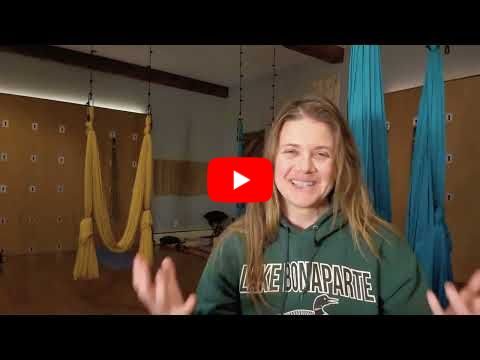
In this week’s One Mindful Minute, we explore a powerful and super simple awareness exercise: Practicing the Pause. By gently observing and working into the natural stillness between your inhale and exhale, you can cultivate the ability to "practice the pause" in daily life, avoiding the traps of unconscious patterns and reactivity. Over time, this micro-practice of the breath becomes a macro-template for living with more clarity and choice.
These brief moments of stillness in every breath are all too often overlooked, but they hold immense power. When we learn to settle into their folds, we create space... space to expand beyond our usual boundaries. We make room to notice, to observe, and to then act with clarity and intention. We slowly reclaim our power at that liminal location between trigger and response.
Try this breath-based pause practice in the video above when you feel rushed, triggered, or overwhelmed. Try it when you're calm and centered. Take a moment to work with it whenever it comes to mind. In time, you will find yourself pleasantly surprised by how it gently rewires your responses to life.
Weeds in Our Thinking: Cognitive Biases & Logical Fallacies
Once we've made a little more room in our minds and hearts, we often notice how very unconscious and reactive we are. Taking a few steps back, it becomes clear that we frequently operate from some pretty wild assumptions, misinterpretations, and unhelpful patterns. You are not alone in this. We all fall into patterns of distorted thinking and being. In some ways, it is baked into our system. We are biologically wired for efficiency because efficiency equals survival. The brain likes to use shortcuts whenever possible to save energy. Sifting through nuance, parsing out multiple perspectives, evaluating aligned from automatic, and sorting fact from fiction from opinion in every passing moment uses a ton of mental/emotional resources... Even writing that was exhausting! So, we've developed strategies to conserve our precious time and energy. Some of the most pervasive (and problematic) strategies we humans use include Cognitive Biases and Logical Fallacies.
Cognitive biases are unconscious patterns of thinking that skew how we interpret information, make decisions, or relate to others. These mental shortcuts evolved to help us process complex information quickly. However, they often lead to errors in judgment and reinforce unhelpful beliefs. Logical fallacies are fundamental flaws in reasoning that obfuscate truth. While biases distort how we perceive reality, fallacies distort how we argue for, explain, or understand things. Both are used frequently... and often unknowingly. They're especially common in conversations, debates, and self-talk. Unfortunately, they seem to be increasingly common in our everyday lives. These mental shortcuts, while occasionally useful, more often keep us stuck in reactive, ego-driven, and tribalistic cycles. They prevent connection, understanding, and growth. They hinder finding "Big-T" Truth. Weeding these biases and fallacies out of our thinking is an important part of healing disconnection and promoting both personal and collective evolution. It is a spiritual practice.
This is not about judgment. It’s about discernment. These patterns are completely normal. They evolved to help us survive. But when they run on autopilot, they keep us locked in reactive cycles that disconnect us from our power, our peace, and one another.
Tending our spiritual garden means learning to recognize these patterns with loving awareness... and then choosing something better.
Below are a few common logical fallacies and cognitive biases we might compassionately observe in ourselves. I've also included some questions to help you explore the way they show up for you and what information they offer for your growth.
Confirmation Bias
People naturally seek out and latch onto information that supports their beliefs. We all tend to ignore or dismiss what doesn’t easily jive with our current picture of reality. After all, it takes a lot of energy to rewire and change your mind to accommodate new information, beliefs, and perspectives.
Spiritual opportunity: Can I soften my grip on needing to be “right”? Where do I feel the most friction? Why? How can I listen more fully? Assuming the best of intentions, how might someone who strongly holds this viewpoint explain things? Where is there common ground between these conflicting ideas? What would it mean if these ideas were true? What if they weren't?
Black-and-White Thinking
This is also known as splitting. It is where we categorize things as only "all good" or "all bad", right or wrong. It's an easy shortcut that helps us skip pesky details and avoid extra brain and heart work.
Spiritual opportunity: Where can I find nuance, the gray, the both/and? What is the source of my resistance to holding more than one version of right and wrong here? Is there a scenario where any part of this opposing idea might be true or helpful?
Projection
Projection happens when we attribute our unwanted feelings or traits to others. This often happens when we feel a strong sense of shame, embarrassment, or revulsion toward certain parts of ourselves, or we have unconscious programming around how people or things "should" be (correctly) in the world.
Spiritual opportunity: What am I resisting or avoiding within myself? Where do similar ideas, thoughts, feelings, or patterns show up within me? How can I tenderly embrace the underlying needs that these feelings are signaling within my own being? What bothers me the most about this? Why does it bother me? (And then keep asking "Why?" for each of the answers that show up!)
Ad Hominem
Translated as "Against the Man", this is a process where we abase or invalidate a person or group instead of directly addressing their ideas or actions. Often, when we feel threatened, challenged, or emotionally triggered, we go into a defensive/reactive state. Attacking a person can feel like a shortcut to "winning", helping us feel safer and stronger by distancing ourselves and others from the danger we sense. It can be used to cause distraction and avoid vulnerability. Often, ad hominem attacks attempt to discredit another person and thus create the illusion that their argument or actions are invalid or tainted (even if they're not) because they are invalid or tainted.
Spiritual opportunity: Can I separate the message from the messenger? If the same facts, arguments, or situations involved someone without the same personal flaws, would my assessment change? How? Why? Is there a scenario where I might think or behave in the same or similar way?
Negativity Bias
This happens when we give more weight to negative experiences than positive ones. The tendency to engage in negativity bias is hard-wired into our nervous systems. It’s not just a common occurrence; it’s a natural trait that evolved for our survival. Negative experiences imprint more quickly and deeply in the brain than positive ones. According to neuropsychologist Rick Hanson, “The brain is like Velcro for negative experiences and Teflon for positive ones.” Our ancestors didn’t need to remember every beautiful flower or friendly face, but they did need to recall which clouds preceded bad storms and where predators often lurked. So, the nervous system became wired to preferentially anticipate and remember threats first, because that’s what kept us alive. Left unchecked, though, this pattern can quietly steal our joy, warp our perceptions, and fuel disconnection from ourselves and others.
Spiritual opportunity: Try to notice when the mind gravitates to “what’s broken.” Then, gently refocus and ask, “What else is true here? What is right, good, connecting, and nourishing in this moment?” Can I notice and compassionately name my negativity bias when it shows up? ("Ah! There you are, my old friend! Thanks for trying to keep me safe!") Can I introduce positivity into the mix? ("Let's explore another perspective here. What is going right in this moment?") When experiencing negativity, what resources or practices help shift toward balanced awareness?
Straw Man Fallacy
Ugh. This one here is an age-old tactic. With a Straw Man Fallacy, we exaggerate or misrepresent someone’s point to make it easier to attack. Here's an example:
Person A: “I think we should reduce how much plastic we use and find sustainable alternatives.”
Person B: “Oh, so you want to ban all modern convenience and make everyone live like it’s the 1800s?”
This strategy is often used unintentionally. Sometimes people mishear or misunderstand another's viewpoint and respond to what they think was said. They might also unconsciously reshape or interpret another's words to fit into their own emotional state or worldview. However, in both private and public interactions (politics, media, online arguments), straw man tactics are frequently used deliberately to rally support, stir emotions, and create division. We have all experienced how hyperbole and misrepresenting "the other side" garners more attention and support than engaging in calm, honest dialogue. Careful, nuanced, considerate conversation is boring and a bit tedious... not good for ratings! Straw Man, however, is way more exciting. The drama and charge it brings can be very manipulative and enticing. It is a form of rhetoric that distorts the other person’s view into something extreme, absurd, or even threatening. It creates an unconscious feeling of dislike, distrust, and even disgust. Perverting another person or viewpoint in this way makes it easier to dismiss and demean them, their actions, and their perspective. It is really a lazy form of communication, as a wholesale dismissal of an argument often feels safer and easier than acknowledging potential areas of validity or connection.
Spiritual opportunity: Am I seeking understanding, or am I seeking "victory"? Can I accurately and compassionately explain the other person's ideas and perspective, even if I don't share them? Do I sense the desire within myself to be dismissive, inaccurate, or hyperbolic? Why? What is my intention in this exchange?
Compassionate Vigilance: Tending the Spiritual Garden
Spiritual Practice as a whole is not seeking perfection. It is the continual process of moving into alignment. It’s about developing a loving, watchful awareness. It is about creating ever-greater clarity and fluid ease with Truth, both in thought and in action. Cultivating this sort of presence and discernment takes significant time, faith, dedication, and love. It is much like carving a beautiful statue out of stone using only the gentlest, but most unrelenting and consistent, touch of a silk scarf.

One of my favorite spiritual teachers, Christopher Wallis, speaks of the need for vigilance on the journey. We must be tenderly unrelenting in our quest to weed out the distortions and delusions that choke the life and light from our lived experiences. This is satya (truth) in the yogic tradition. We must cultivate tapas (spiritual passion or discipline) for creating a rich, unpolluted inner environment in which to bloom. In this process, we work to abide in ahimsa (love) and santosha (contentment with what is, right now).
When we notice distortions in our thoughts, feelings, words, or deeds, we don’t trash-talk ourselves. We don’t spiral into shame. We simply pause, observe, and invite loving presence. The space and centeredness provided in doing so allow us to discern, to choose our next thoughts and actions. We have the opportunity to create deeper alignment between Truth, our deepest needs and values, and what we do in the world. These are the most golden of growth opportunities.
"Between stimulus and response there is a space. In that space is our power to choose our response. In our response lies our growth and our freedom" -Viktor E. Frankl
This is compassionate vigilance, the commitment to pause and gently, consistently notice and refine those patterns within ourselves that keep us (and others) in suffering. It is a continual practice of weeding the spiritual garden, removing the unnecessary and unaligned, and nourishing that which supports life so that we all might truly thrive.
“That's all well and good,” you might say. “But what about all these other jerks that are jerking me and the world around?”
Next, in Part 3, we’ll tackle the natural follow-up to all this inner work.
We’ll take a mindful look at frustration, angst, judgment, and disconnection... all of those friction-filled feelings we get when we look at the world (and some of the folks in it). Then, we will work together on some ways we can alchemize those dynamics into deeper integrity, alignment, purpose, and connection.
With you in the weeding,
Nichole


Upcoming Offering:
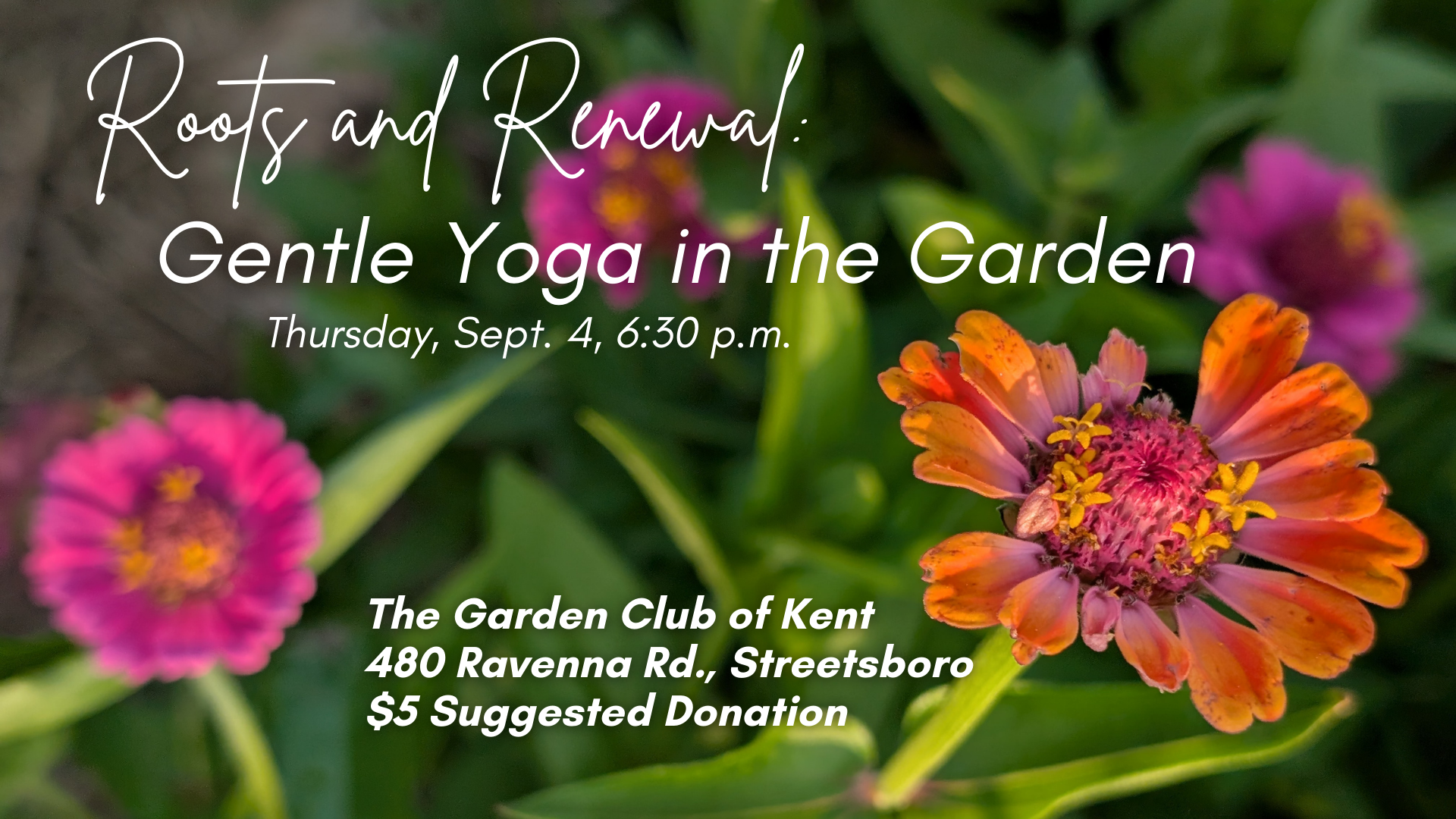
Roots and Renewal: Gentle Yoga in the Garden
Thursday, Sept. 4 at 6:30 p.m.
$5 suggested donation per person
The Garden Club of Kent, 480 Ravenna Rd., Streetsboro
RSVP by Wednesday, Sept. 3, to BackyardPest@gmail.com
Soothe your senses and nourish your spirit! Join us for an inclusive, gentle yoga class on the beautiful grounds of The Garden Club of Kent. Together, we’ll explore mindful breathwork, intuitive movement, and guided meditation to cultivate a tender connection between the inner and outer world. This practice can be done from a mat (bring your own, or borrow one of our extras) or from a chair. We welcome every body and all levels of experience. Come as you are! Breathe in the fresh air! Soak up the sunlight! Enjoy the presence of community and renew amid an abundance of beauty and life.

Responses